Posts

Showing posts with the label biblical interpretation

Frederick Murphy, Apocalypticism in the Bible and Its World: A Comprehensive Introduction

Image
This past semester I taught a course on the New Testament and Jewish apocalypses. For the required texts, along with reading the Jewish apocalypses themselves, I required John Collins' The Apocalyptic Imagination and the recent award-winning and posthumously published Apocalypticism in the Bible and Its World  by Frederick Murphy. I have a book review of Murphy coming out in next Trinity Journal , but I wanted to make some comments here that I was not able to include in the more traditional book review. My students found Murphy more readable and accessible than Collins. I suspect that this is because Murphy has written in a style that an undergraduate can more easily grasp, and I think the fact that Murphy summarizes more familiar (biblical) material than Collins (Jewish apocalypses) also made Murphy seem more friendly. One challenge with using a book like Murphy is that it is a long textbook that summarizes a lot of primary material, while highlighting specific themes through...

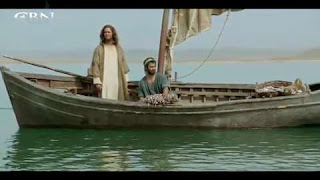
Son of God: The Bible Miniseries Remix

There has been a bit of talk with the release of "Son of God" in the theatres within the last two weeks. I have not seen it, but I have seen the full Bible miniseries from which "Son of God" is derived. Through various reviews, I have learned that material was edited out and deleted scenes added. So it would have been worth my time to view the "new" film as a study in modern Gospel redaction. Craig Keener's article in CT highlights the removal of the devil from the "Son of God." I suspect this means that the entire temptation narrative was excised. Keener's article is also provides an in-depth look at the role the devil plays in each of the Gospel narratives. So his review is not so much a review as an excellent mini-study on the devil in Matthew, Mark, Luke, and John. Kenneth R. Morefield in a CT movie review refers to the "Son of God" as "a bit like listening to a pretty good tribute band doing a set list of Top 40...

Wycliffe Centre for Scripture and Theology Fall Colloquium 2013 - Reading Paul

Wycliffe Centre for Scripture and Theology Fall Colloquium 2013 announced . It is a geat line-up on "Reading Paul: Exegetical Method and Interpretation after the 'New Perspectives.'" ............................................................................................................................................................ Reading Paul: Exegetical Method and Interpretation After the "New Perspectives" Presentations by Dr. Ian W. Scott   (Tyndale) "Overview of the 'New Perspectives'" Author of Paul's Way of Knowing: Story, Experience, and Spirit. Baker, 2008. 9:15am Dr. Douglas Harink   (King's College) "Prolegomena to an Imagined Project: Systematic Theology as a Commentary on Romans" Author of 1 & 2 Peter. Brazos Theological Commentary on the Bible. Brazos, 2009; Paul among the Postliberals:...

Visualized Bible: Cross-references Imaged

Image
Recently the Guardian Data Blog brought together a number of data images of the Bible in a post entitled "Holy Infographics: the Bible Visualised." The above image is the first of those images. I think that the image itself is actually quite beautiful in the rainbow like arcing of color, especially when the high resolution image is viewed (find that here ). The image is attributed to Christoph Römhild and Chris Harrison. And the following description of the image is given:   "This is about how the bible speaks to itself - or the textual cross-references within it. The bar graph that runs along the bottom represents all of the chapters in the Bible. Books alternate between white and light gray and the length of each bar denotes the number of verses in the chapter. Each of the 63,779 cross references found in the Bible is depicted by a single arc - the color corresponds to the distance between the two chapters, creating a rainbow-like effect." This ap...

The Bible Miniseries 3: Weakest Moments and the Most Powerful One

Image
Previously, I have commented on the  "10 hour" miniseries on "The Bible" with regard to its portrayal of angels and its portrayal of certain characters such as John the Baptist. I would like to conclude my three part series by addressing what to me were two of the weakest moments of "The Bible" from a biblical and theological perspective. To be fair I will finish with a few comments on what I think is the most powerful scene of the 10 hours. (Comments on this scene have already been made by Rachel McMillan .) The first of the two weak moments I want to mention is the calling of Peter . This scene has problems for me because there is a cheesiness to it, while it is also a bit off both biblically and theologically. This account of the calling of Peter comes from Luke 5 and not from Matthew or Mark or John. In Luke's account, Peter, James, and John become disciples after Jesus gets into Simon Peter's boat and asks Peter to take him out into the ...

The Bible Miniseries 2: Interpretation through Characters and Juxtapositions

Continuing with some thoughts and reflections on the "10 hour" miniseries on  The Bible , I want to follow up my comments on the portrayal of angels with some comments on certain characters and the depictions of them. The first I would like to mention is that of John the Baptist. John the Baptist is an extremely important figure in the Gospels. All four Gospels present John as the forerunner of Jesus the Messiah. He is the one who prepares the way, fulfilling prophecies from Malachi 3 and Isaiah 40. Although Luke says that John and Jesus are related, none of the other three Gospels indicate any special relationship between John and Jesus apart from John's baptism of Jesus. "The Bible" portrays John as the sort of eccentric holy man or prophet that he most likely was. John the Baptist led a renewal movement for the forgiveness of sins out in the wilderness in the provocative location of Israel's entry into the promised land (Joshua 3). What I found comp...

The Bible Miniseries: Angels

Not long ago now, I watched the "10 hour" miniseries on The Bible . Thankfully I didn't have to sit through the almost three hours of commercials to do so. And once you figure in all of the repetitive "previously on 'The Bible'" bits, it may only be 6+ hours. Regardless of its length, The Bible was an ambitious project that was well received, and it will probably continue to be well received. However, any project of this size and breadth will have its positive and negative aspects. Thankfully, the miniseries was more positive than negative. They made some interesting choices on what to film, and stories were woven together in thought provoking ways that brought about fresh interpretation. Yet there were other instances where the scene or script fell flat in dramatically disappointing ways. One aspect that I was most impressed with was the portrayal of the angels. I have done some research on angels in Second Temple Judaism, and the portrayal of ange...

Translating the Bible and First Nations Languages

I sat in on Ruth Heeg's paper at the Native American Institute of Indigenous Theological Studies Symposium 2013 Friday afternoon. The paper was quite interesting, especially for someone who teaches Greek and challenges students to think about translation. Some sitting near me were less than enthused about the discussion of transitive and intransitive verbs and abstract nouns in Greek, English, and Algonquian languages. At some level, (μεν) I agree with them, but (δε) on the other hand, all of these grammatical details are important for translation, especially when it involves translating a text that means a lot to many people. In her paper, Heeg focused on the translation of Greek abstract nouns in First Nations languages, particularly Algonquian languages such as James Bay Cree, Ojibwe, and Plains Cree, in New Testament doxologies. One passage she used as an example was Rev 4:11: “Worthy art thou, our Lord and God, to receive glory and honor and power, for thou didst create a...

Wycliffe Centre for Scripture and Theology

The Wycliffe Centre for Scripture and Theology spring colloquium was Friday on the topic of "Proverbs 8 and the Christian Theological Reading of the Scripture." Four papers were given by Michael Kolarcik of Regis College, Christopher Seitz of Wycliffe, Donald Collett of Trinity School for Ministry in Mass, and Ephraim Radner of Wycliffe. Theological interpretation is the main focus of these colloquia and it is the sort of look at these texts (Prov 8 specifically) that make a historical-critical biblical studies person (like myself) slightly squeamish at moments. However, much of the time these discussions provide a challenge to think theologically about the text and a reminder to consider or an introduction to the history of interpretation about the text. In that vein, Kolarcik offered a more comfortable and persuasive (to me) contextual setting for understanding wisdom in Proverbs 8 within the larger context of Prov 1-9 (and more helpfully Wisdom of Solomon 6-10 and Sira...

Gundry on Christ and Scripture

Image
Just a couple quotes from Robert H. Gundry's essay "Hermeneutic Liberty, Theological Diversity, and Historical Occasionalism in the Biblical Canon" in his book The Old is Better: New Testament Essays in Support of Traditional Interpretations (pp. 1-17). "...the Christ of the NT insists on questioning us before answering us. Here as elsewhere in the Bible the text interprets us before we interpret it" (15). "...it is not enough to know what the Scriptures teach; we also need to discern what is appropriate and inappropriate to be said from them in any given situation" (16).

James L. Kugel, "The Beginning of Biblical Interpretation"

Image
James L. Kugel has an essay entitled "The Beginning of Biblical Interpretation" in Matthias Henze (ed.), A Companion to Biblical Interpretation in Early Judaism (Eerdmans, 2012), pp. 3-23. The essay is an excellent introduction to interpretation of the Hebrew Bible during the Second Temple period (i.e., "early Judaism"). He notes that such interpretation may be found in later Old Testament books such as Chronicles, the Greek translation(s) of the OT, apocryphal and pseudepigraphal texts (Ben Sira, Jubilees, Wisdom of Solomon, Testament of the Twelve Patriarchs), the Dead Sea Scrolls, Philo, Josephus, and Pseudo-Philo. The central piece of the essay are the four assumptions that he argues form "a common attitude and approach to the biblical text" even with the differences of time, location, and content in the texts and authors mentioned above (p. 13, emphasis original). These assumptions are 1) The Bible is a fundamentally cryptic document, which means...

Joel Green on Theological Interpretation

Image
Joel Green offers some helpful insights on theological interpretation in his book Practicing Theological Interpretation: Engaging Biblical Texts for Faith and Formation. In a section of chapter 3 in which he discusses the rule of faith, he states: "...if we want to affirm that scriptural engagement is inescapable for the Christian community, sola Scriptura can never guarantee that one is Christian. Most of us have our own anecdotal evidence for how a plain reading of a biblical passage has been used to support sheer nonsense...This recommends the practice of theological formation as a prerequisite or corequisite for practicing the craft of biblical interpretation. It also proposes at least two contenders for the title 'The Great Problem Facing the Church': is the church's great problem biblical illiteracy , or is it theological amnesia ? (I say both)" (74-75).

John Webster, Christology, Exegesis and Theology

Image
An additional quote from John Webster's conclusion to his essay "Jesus Christ" in the Cambridge Companion to Evangelical Theology... "Christology responds to the self-communicative presence of its object in the twofold work of exegesis and dogmatics. Exegesis is not the same as study of the history of biblical literature and religion in their settings. Modern evangelicals have sometimes been bedazzled by the range and sophistication of historical procedures at their disposal, and busied themselves to master them in the hope of outbidding their opponents. But historical studies are the servant of exegesis, not its master. One thing which evangelical doctrines of the sufficiency of Scripture ought to have secured is that the ultimate resource is the text, not what can be reconstructed about what lies behind the text, for the text is an act of God's self-disclosure. The fruits of the immense labors of evangelical New Testament scholars are by no means negligibl...

John Webster, Jesus Christ, & Evangelical Theology

Image
Continuing through The Cambridge Companion to Evangelical Theology (ed. Timothy Larsen and Daniel J. Treier), John Webster presents a dense and sharp critique of evangelical theology on Christology in his essay "Jesus Christ." Any evangelical theology of Jesus or even NT study of Jesus should take into account Webster's challenges. Here are two such comments: "Contemporary evangelical historians of Jesus and his early followers are certainly more sophisticated then their forbears, and a good deal more relaxed about the need to defend the viability of confessional orthodoxy or the reliability and authority of the apostolic witnesses. What they have in common with earlier work is the fact that their arguments are historical, not theological, and direct themselves primarily to historical reason rather than the judgment of faith. In this sense, they continue the evangelical tradition of Christology "from below" -- not in the sense of proposing a "lo...

Origen, Interpretation, & Creation

In David C. Steinmetz's, 1980 essay "The Superiority of Pre-Critical Exegesis" in Theology Today , he cites the Alexandrian church father Origen: "Now what man of intelligence will believe that the first and the second and the third day, and the evening and the morning existed without the sun and moon and stars? And that the first day, if we may so call it, was even without a heaven? And who is so silly as to believe that God, after the manner of a farmer, 'planted a paradise eastward in Eden,' and set in it a visible and palpable 'tree of life,' of such a sort that anyone who tasted its fruit with his bodily teeth would gain life; and again that one could partake of 'good and evil' by masticating the fruit taken from the tree of that name? And when God is said to 'walk in the paradise in the cool of the day' and Adam to hide himself behind a tree, I do not think anyone will doubt that these are figurative expressions which indicate...

Pastorum Live Conference

A great conference with really good biblical and theological speakers has just been brought to my attention. The conference is Pastorum Live and is in Chicago June 5-6. The schedule offers some excellent topics and speakers.

Childs the Challenge of the Christian Interpreter of Scripture

"The challenge of the Christian interpreter in our day is to hear the full range of notes within all Scripture, to wrestle with the theological implication of this biblical witness, and above all, to come to grips with the agony of our age before a living God who still speaks through the Prophets and Apostles." --the concluding sentence of Brevard S. Childs, "Psalm 8 in the Context of the Christian Canon," Interpretation 23.1 (1969), 20-31 (31).

"How to Read the Bible" in Christianity Today

The cover story for this month's (October 2011) Christianity Today is an article by J. Todd Billings entitled "How to Read the Bible: New strategies for interpreting Scripture turn out to be not so new--and deepen our life in Christ" . The article introduces some of the main themes and scholars in the field of theological interpretation of Scripture. Billings makes some excellent points and is challenging about the place of a theological hermeneutic in relation to historical-critical exegesis and also in relation to the Church's engagement of Scripture in the context of worship and devotion. One quick quote (for now), pp. 25-26: "Instead of providing a detailed blueprint, a theological reading [of Scripture] brings a map for a journey. Our map does not give all the answers about a particular text. Instead, our reading sends us on a journey in which God in Scripture encounters us again and again, both with comforting signs of his presence and surprises that conf...

The Hermeneutical Role of Biblical Theology

Image
Here are some comments by Graeme Goldsworthy in his book Gospel-Centered Hermeneutics: Foundations and Principles of Evangelical Biblical Interpretation . The comments come from his chapter "The Gospel and the Theological Dimension (II): Biblical and Systematic Theology." "The biblical theological dimension in hermeneutics is thus the major way of addressing the question of the gap between the text and the reader. It allows the reader to find where he or she actually fits into the totality of biblical revelation. If done with care, it will then provide the valid links between the meaning of a text in its own context and its application to the modern reader. The offending gap is the theological distance of texts from the modern reader. But, if the gap is uniformly closed by the reader to give an undifferentiated immediacy to all texts, the result is hermeneutical chaos. Some forms of pietism and 'Spirit-driven' subjective theology result in such an approach, whi...

Eugene Petersen, Eat this Book--gnawing on words

Image
I have been making my way slowly through Eugene Peterson's, Eat this Book: A Conversation in the Art of Spiritual Reading . I say slowly because I often find myself rereading sections and taking to heart his comments about the need to gnaw on words. Peterson is talking specifically about reading Scripture, but there is a depth to his writing and experience that requires his words to be read over. Here is a quote from the end of his first chapter entitled "The Forbidding Discipline of Spiritual Reading" (p. 11).  "Reading is an immense gift, but only if the words are assimilated, taken into the soul--eaten, chewed, gnawed, received in unhurried delight. Words of men and women long dead, or separated by miles and/or years, come off the page and enter our lives freshly and precisely, conveying truth and beauty and goodness, words that God's Spirit has used and uses to breathe life into our souls. Our access to reality deepens into past centuries, spreads across co...