Posts

Showing posts with the label Gospel of John

Apology to Saeed Hamid-Khani

It has been a while since posting, but I have been meaning to get to this one. I wanted to formally apologize to Dr. Saeed Hamid-Khani for not making use of his published thesis in the writing of my own thesis on the Gospel of John. Hamid-Khani's thesis was published as: Revelation and Concealment ofChrist: Theological Inquiry into the Elusive Language of the Fourth Gospel  (WUNT II/120; Tübingen: Mohr Siebeck, 2000) . It was examined by William Horbury and C.K. Barrett. John Philip M. Sweet was Hamid-Khani's supervisor.  In the course of working on an essay related to the topic of "revelation" in the Gospel of John, I ran across the title of Hamid-Khani's book. I was able to get a copy through interlibrary loan and waded my way through the immense amount of work that the volume contains. The striking contribution of Hamid-Khani's thesis is his  challenge  to Rudolf Bultmann's claim that what is revealed in John's Gospel is an empty revelation fo...

John Ashton's new book, The Gospel of John and Christian Origins (Fortress Press)

Image
John Ashton's book The Gospel of John and Christian Origins was published this spring by Fortress Press . I did have the opportunity to read earlier versions of about half the chapters, and it has been enjoyable to read through the finished book. Ashton has continued themes from his previous book on John, Understanding the Fourth Gospel (1st ed. 1991; 2nd ed. 2007). Ashton made significant changes between the two editions of Understanding , but the third section on "Revelation" (pp. 303-528 in the 2nd ed.) was largely left unchanged. (See my comments on that volume here .) Ashton acknowledges he is revising that section in Gospel of John and Christian Origins , but he is also making more explicit his arguments for the history behind the Gospel, its writing, and Johannine Christianity. The primary interlocutors and support for Ashton throughout the book are Wayne Meeks, Rudolf Bultmann, Ernst Käsemann, and J. Louis Martyn. Coupled with the title, it is clear that ...

Pre-SBL Conference on Brown, Dodd, and the Gospel of John

An excellent Pre-SBL conference is being jointly hosted by St. Mary's Seminary and University and the John, Jesus, and History Group. The headline speakers will be James Dunn and Alan Culpepper who have been outstanding contributors to Johannine scholarship. Other noteworthies include John Ashton, Jan van der Watt, Craig Koester, and Catrin Williams. The conference is subtitled "Engaging the Legacies of C.H. Dodd and R.E. Brown." Looks to be a highlight of SBL even before SBL begins. Details below: John, Jesus, and History Engaging the Legacies of C.H. Dodd and Raymond E. Brown A Pre-SBL Conference at Saint Mary’s Seminary & University, Baltimore November 20-22, 2013 Program as of May 1, 2013 Sponsored by the John, Jesus, and History section of SBL and St. Mary’s Seminary & University Conference fee: $150 (June 1 to October 15; $170 thereafter) (includes program, lunch and dinner Thursday, coffee breaks, reception) WEDNESDAY ...

Thyen on an apocalyptic Son of Man in John's Gospel

"Die danielische Vision eines 'wie ein Mensch ' aussehenden Himmelwesens und der sogenannte 'apokalyptische Menschensohn' spielen bei Joh keine Rolle" (Hartwig Thyen, Johannesevangelium , 205). I should say that I couldn't disagree more. 

Words of Comfort to a young scholar by C.K. Barrett

Quite possibly not all young scholars will find this encouraging, but rather discouraging. I, however, am encouraged by these words from such an eminent scholar of the New Testament. In the preface to his second edition of The Gospel According to St. John (1955, 1978), C.K. Barrett states: "I can see it [the commentary] now as a juvenile work, and if today I were to set about a commentary on John it would be a different book. But life is short..." (vii).

John's Gospel and Intimations of Apocalyptic, University of Bangor

Day 1. We had some excellent papers to start off the first day of the colloquium. John Ashton commenced the precedings with a well-written look at some of the historical traditions behind the connections between the Gospel of John and the apocalyptic genre. I find it fascinating that this sort of discussion always brings us to 1 Enoch . There are different views regarding what we do with any sort of connection between 1 Enoch and John, but the two texts have surprising similarities. One of the other questions that arises is whether the Fourth Evangelist is consciously replicating an apocalyptic structure or if such a structure was just part of his worldview. Judith Lieu gave the next paper and discussed the issues of text and authority. She raised some excellent questions about writings in apocalypses (such as heavenly tablets) and the relationship these writings have with the written apocalypse. In relation to John, this comes to a head specifically in 20:30-31 and 21:24-25. The G...

John's Gospel and Intimations of Apocalyptic, University of Bangor

John's Gospel and Intimations of Apocalyptic Colloquium sponsored by the School of Theology and Religious Studies at the University of Bangor and the Bible Society begins tomorrow afternoon with a paper by John Ashton entitled 'John and Intimations of Apocalyptic: Looking Back and Looking Forward'. The colloquium as a whole will be exploring the ways in which the Gospel of John reveals connections with apocalyptic literature and apocalypticism. This relationship has been argued by Ashton in Understanding the Fourth Gospel (2nd ed.; OUP, 2007), but not many scholars have undertaken a serious examination of the connection. Highlights of the programme for me include the papers by John Ashton, Judith Lieu, April DeConick, Jorg Frey, Christopher Rowland, and Loren Stuckenbruck. It looks to be an interesting few days.

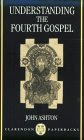
John Ashton, Understanding the Fourth Gospel -- Second Edition

Image
I have recently finished reading through John Ashton's second edition of his work Understanding the Fourth Gospel (OUP, 2007), and it is not merely the Technicolor version of the original publication (1991), although it may look that way. His introduction has had a significant overhaul in the second edition that streamlines the discussion, but the first edition's introduction may offer further background for readers on the state of play prior to Ashton, especially regarding Bultmann's contribution. The second edition has some rearrangement of chapters and four new excursuses. John Ashton's overall study remains the same: he argues for the importance of the theme of revelation in John's Gospel and disagrees with Bultmann's conclusion that all Jesus reveals is that he is the Revealer. Ashton concludes that the mode of the revelation, the gospel, has a part to play in the revelation. For the Fourth Gospel, revelation is not just about Jesus' words or the...